

Infra-based regenerative technologies in sports

Updated: May 1
What do research studies say about the effects of photobiomodulation, active regeneration, and electromagnetic stimulation?
The modern sports science landscape has increasingly focused, over the past two decades, on how to enhance athletic performance not merely by increasing training volume, but by improving recovery efficiency and optimizing physiological processes.
In elite sports, recovery time is often just as critical as training or competition itself. Overload, microtrauma, muscle fatigue, and inflammatory processes can all limit performance.
As a result, growing attention has been directed toward non-pharmacological, technology-based recovery solutions aimed at:
accelerating muscle regeneration
improving microcirculation
reducing muscle fatigue
supporting cellular energy processes
These include, among others, infrared radiation-based photobiomodulation technologies, pulsed electromagnetic fields (PEMF), and low-intensity active recovery movement modalities.
Although these tools are often integrated within various innovative recovery systems, the scientific literature has primarily examined the effects of each component separately. This article reviews the physiological mechanisms through which these technologies may influence athletic performance and recovery based on current research.

The importance of regeneration in sports performance
Intense physical exertion triggers a range of physiological changes in the muscular system:
microscopic muscle damage
inflammatory processes
oxidative stress
depletion of energy and glycogen stores
To maintain athletic performance, optimizing recovery processes is therefore essential.
Active recovery, heat therapy, and various biophysical stimulation technologies aim to:
accelerate the removal of metabolic byproducts
improve blood circulation
support cellular energy processes
Photobiomodulation and infrared radiation in sports
Therapies based on infrared radiation belong to the group of so-called photobiomodulation (PBM) technologies.
These methods use red or near-infrared light, which can penetrate muscle tissues and influence cellular energy processes.
The biological mechanism
Research suggests that one of the key targets of photobiomodulation is mitochondrial function.
-infrared light may:
activate the cytochrome c oxidase enzyme
increase ATP production
reduce oxidative stress
This may theoretically contribute to:
delayed onset of muscle fatigue
accelerated recovery
improved muscle performance
According to a comprehensive sports physiology review by Leonardo Leal-Junior, photobiomodulation under certain conditions may improve muscle performance and reduce fatigue, particularly when applied before exercise (Lasers in Medical Science).
Infrared radiation and circulatory effects
Another important effect of infrared radiation is the increase in tissue temperature and microcirculation.
In the case of water-filtered infrared-A (wIRA) technology, studies have shown that the radiation:
penetrates deeper into tissues
increases tissue oxygenation
enhances blood flow
In a randomized controlled trial combining wIRA with cycling exercise, researchers observed greater reductions in body circumference and body weight among participants compared to those performing ergometer training alone.
The authors attributed this to enhanced lipolysis and improved oxygen supply.
It is important to note, however, that the study was not conducted on elite athletes, and therefore direct extrapolation of the results to sports performance requires further research.

The role of active regeneration
Active regeneration has long been a standard component of athletes’ recovery protocols.
It typically involves low-intensity aerobic movement, such as:
light cycling
jogging
mobility exercises
The goal of active regeneration is to:
maintain blood circulation
facilitate the removal of metabolic byproducts
improve muscle oxygenation
Sports science studies suggest that active recovery can, in certain situations, support faster recovery, particularly after repeated sprint efforts.
Pulsed electromagnetic field (PEMF) and regeneration
Pulsed electromagnetic field therapy has been used for more than fifty years across various medical fields.
In sports, it has gained attention more recently, primarily for recovery purposes.
Possible mechanisms of action
The exact mechanism of PEMF is not yet fully understood, but research suggests it may influence:
cellular ion channels
calcium metabolism
inflammatory processes
Some studies indicate that PEMF application may reduce delayed onset muscle soreness (DOMS) and improve the recovery of muscle function.
Other research suggests it may also affect neuromuscular activation and muscle metabolism.
However, current literature emphasizes that further well-controlled human studies are needed to validate its application in sports.
Combined recovery approaches
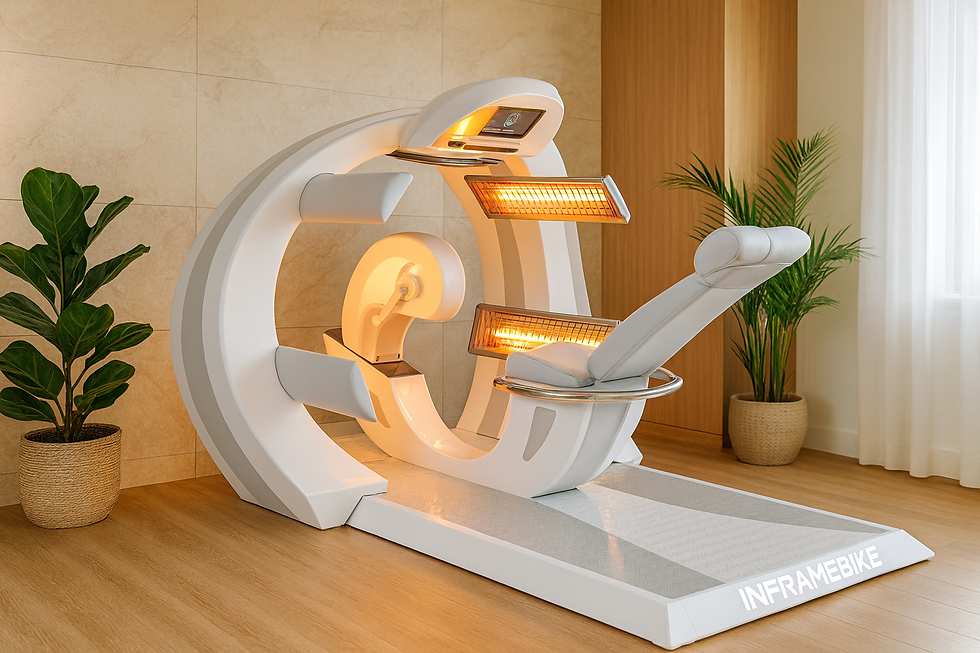
An emerging area in sports science is the development of integrated recovery technologies.
These systems aim to combine multiple physiological effects:
active movement
heat therapy
biophysical stimulation
The theoretical foundation is that different mechanisms may reinforce each other.
For example:
movement → enhances muscle metabolism
infrared → improves microcirculation
PEMF → may stimulate cellular regeneration processes
This combination may be particularly relevant in situations where rapid recovery or rehabilitation is critical for athletes.
What is proven and what still requires research?
Based on current scientific consensus, the following conclusions can be drawn:
Well-supported areas
the role of active recovery
the effects of photobiomodulation on certain muscle performance parameters
Promising, but requiring further research
the combination of infrared heat and exercise
PEMF in athletic recovery
It is important to note that the effectiveness of these technologies depends significantly on:
dosage
timing of application
type of sport
individual physiology
As sports science continues to evolve, increasing attention is being given to technologies that support recovery and physiological optimization.
Infrared-based photobiomodulation, low-intensity active recovery, and pulsed electromagnetic fields are all areas supported by a growing body of research.
Although relatively few studies have directly examined fully integrated systems, the physiological mechanisms of the individual components align well with current models of sports recovery.
As a result, these technologies are increasingly being applied in:
sports rehabilitation
recovery centers
high-performance sports environments
A fundamental principle of sports science is that every new technology should be evaluated through the dialogue between practice and research.
This also applies to infrared and biophysical recovery technologies.
Future research will likely provide a clearer understanding of the role these solutions can play in enhancing athletic performance and recovery.
For those interested in the topic, the most effective approach remains to experience the technology in practice and compare it with their own sports physiology insights.


Comments